New York state has taken formal steps to enforce landmark safety legislation targeting leading artificial intelligence companies. On Tuesday, authorities launched an official registration portal requiring high-revenue frontier developers, including OpenAI and Anthropic, to register by January 1, 2027. The measures are part of the state's RAISE Act, a comprehensive safety and transparency measure that takes effect at the beginning of the year.
Under the RAISE Act, developers generating more than $500 million in annual revenue must comply with stringent operational standards. These include publishing formal safety frameworks on their websites, notifying state authorities of critical safety incidents within a 72-hour window, and releasing public model transparency reports. Enforcement will be handled by the newly created Office of Digital Innovation, Governance, Integrity, and Trust (DIGIT). Non-compliance carries severe financial repercussions, with fines reaching up to $1 million for initial violations and up to $3 million for subsequent infractions. State officials also maintain the authority to take enforcement action against firms that neglect to register through the newly launched portal.
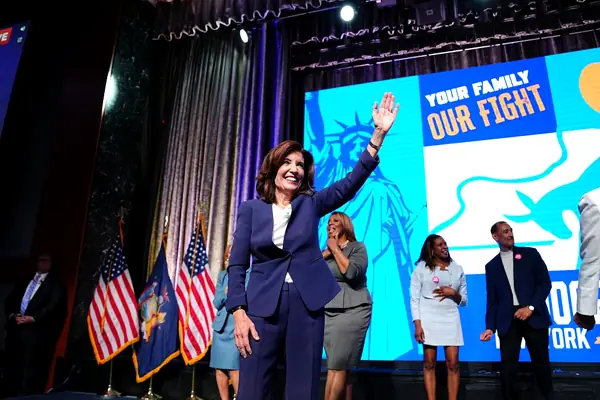
Highlighting the state's regulatory push, Governor Kathy Hochul announced the establishment of the New York Center for AI Responsibility and Research at the State University of New York's Binghamton University. Backed by $55 million in capital and donations first revealed in January, the facility will independently examine the safety, security, and performance of sophisticated AI models while partnering with DIGIT to evaluate corporate safety frameworks. Hochul criticized tech industry attitudes that treat unintended consequences as acceptable costs in competitive races, asserting that New York is crafting a sensible regulatory model prioritizing the public over tech power.
The legislation represents the latest step in New York's expanding regulatory framework, which has gained significant attention across AI news. The state previously mandated transparency for automated companion services, requiring operators to inform users of bot interactions and implement detection measures for self-harm and suicidal ideation. Another law passed in October bars deceptive human-like features and emotional manipulation targeting minors, set to take effect on June 1, 2027. New York's measures parallel efforts in other states, including California’s SB 53, which mandates 15-day incident reporting and whistleblower safeguards, and Illinois’ SB 315, which will introduce independent compliance audits in 2027.