Trilogies have long been a cornerstone of literature because they mirror the traditional three-act narrative arc: beginning, middle, and end. In the realm of science fiction, this structure provides the necessary scale to explore complex societal shifts and speculative technology. While many series lose momentum after a strong debut, certain trilogies maintain a high standard of excellence across every installment. From dystopian futures to galactic empires, these works offer profound world-building and philosophical depth.
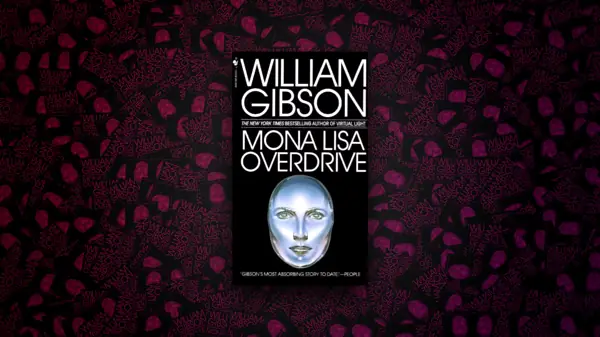
The Sprawl Trilogy by William Gibson is perhaps the most influential example of the cyberpunk subgenre. While his debut novel, Neuromancer, is frequently cited for its groundbreaking vision of a high-tech underworld, its sequels, Count Zero and Mona Lisa Overdrive, are equally vital. Gibson’s prose is notoriously sensory, requiring readers to decipher context cues within a bleak world dominated by corporate power and sentient AI. This uncompromising vision of a hyper-technological future has heavily influenced modern media, including the aesthetic of gaming titles like Cyberpunk 2077.
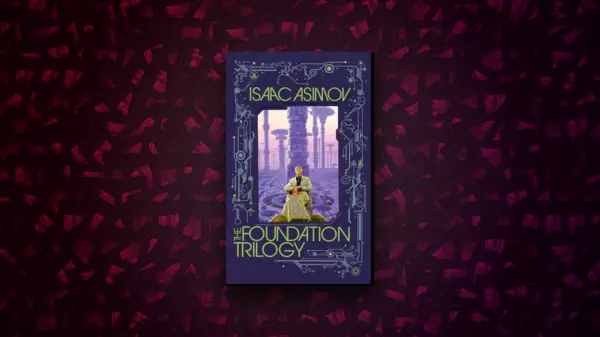
In contrast to Gibson’s gritty streets, Isaac Asimov’s Foundation Trilogy spans an entire galaxy. The series revolves around mathematician Hari Seldon, who uses "psychohistory" to predict the collapse of a 12,000-year-old Galactic Empire. By applying mathematical models to human behavior, Seldon attempts to minimize the duration of the impending dark ages. The narrative, documented on Wikipedia as a foundational pillar of the genre, transforms grand historical cycles into a gripping psychological mystery that remains relevant decades later.
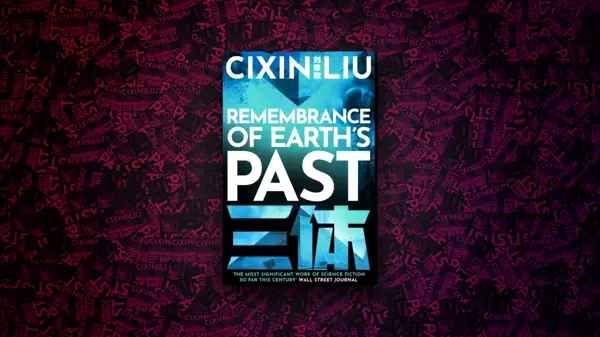
More recently, Liu Cixin’s Remembrance of Earth’s Past has captivated global audiences with its look at civilizational entropy. Starting with The Three-Body Problem, the trilogy explores humanity's response to an impending invasion by the Trisolarans. Cixin’s work focuses on the cold logic of survival, suggesting that adapting to the cosmos may require abandoning traditional human identity. Similarly, Octavia E. Butler’s Lilith’s Brood offers a radical take on first contact, where the alien Oankali rescue the remnants of humanity but demand a genetic trade that will change the species forever. Finally, Kim Stanley Robinson’s Mars Trilogy provides a masterclass in hard science fiction, detailing the multi-generational effort to terraform the Red Planet while Earth faces environmental decay.