For decades, pachyderms have served as a reliable punchline in visual storytelling, but few creators captured their comedic potential quite like cartoonist Gary Larson. Throughout the 15-year run of his iconic single-panel comic strip, The Far Side, elephants frequently found themselves in bizarre situations. Rather than treating them merely as wild animals, Larson routinely dropped these massive creatures into human environments—from crowded cocktail parties and public phone booths to crime scenes and prehistoric watering holes.
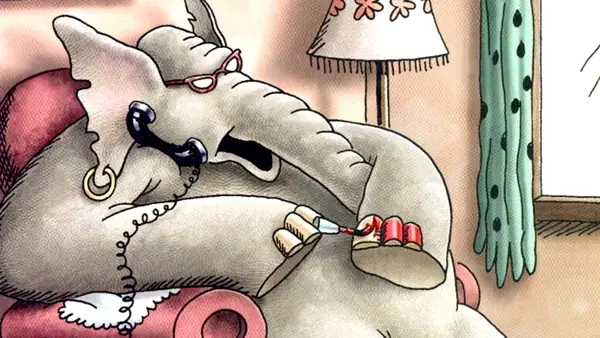
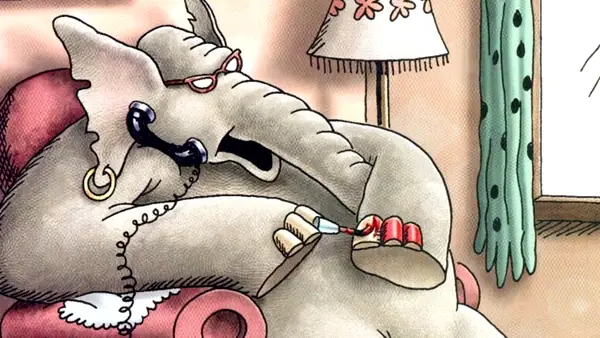
Many of Larson’s most memorable gags drew directly upon popular idioms and animal stereotypes. In one memorable panel, an elephant sits alone trying to drown his sorrows in alcohol, only to suffer the tragic consequence of the famous biological trait that elephants never forget. In a darker spin on real-world issues, another strip tackled poaching when an elephant making a long-distance call discovers that its own missing leg has been converted into a domestic waste basket.
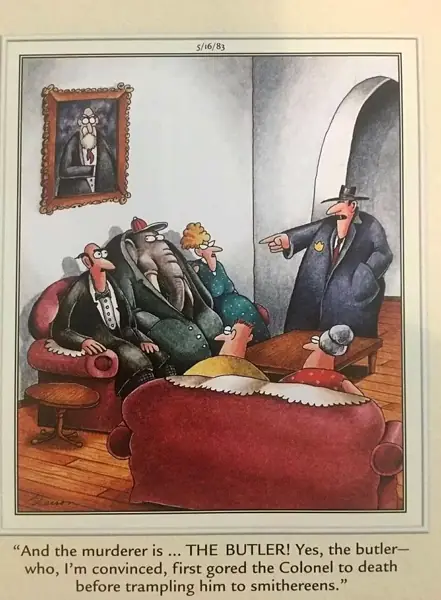
Larson also excelled at creating deeply uncomfortable social awkwardness through his giant subjects. In one drawing, a festive cocktail gathering instantly loses its cheery atmosphere when an elephant guest notices the piano’s ivory keyboard. In a separate crime investigation strip, a detective confidently announces to a room of suspects that the butler murdered the Colonel by goring and trampling him—blatantly ignoring a giant elephant sitting quietly right beside them.
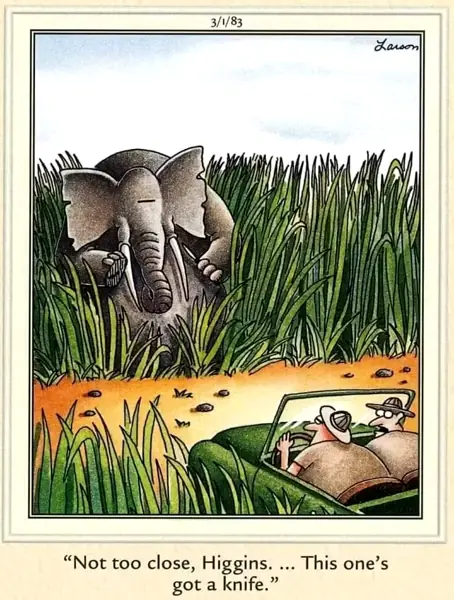
The absurdity extended into surreal biology and unexpected threats. In one panel, an elephant named Edgar attempts to hide a medical anomaly from his herd, which turns out to be a fully formed, tiny human hand. In another, safari hunters navigating dangerous terrain worry not about a giant elephant's tusks or trampling power, but rather about a tiny knife the animal is holding. Finally, prehistoric humans are shown trying to keep score on whether elephants are safe to eat, oblivious to the towering beast standing directly behind their primitive tally board. Readers exploring classic visual humor across entertainment media often point to these strips as peak examples of Larson's distinctive style, which can be further explored on Wikipedia.